Trivia:
Who was Bartholomew in the New Testament?
Bartholomew
was one of JESUS’s Twelve Disciples and thus was an eyewitness of CHRIST’s
ministry. He and Nathanael may very well be the same person. In the Gospels of Matthew,
Mark and Luke, Bartholomew is in the list of Twelve Disciples and Nathanael is
not; however, in Gospel of John, it is reversed – Nathanael is listed in the
Twelve and Bartholomew is not. JESUS initially described him as an “Israelite in
whom is no guile”. After Pentecost, he evangelized what is now Turkey and met
up with Jude. It is said that he carried with him a copy of the Gospel of
Matthew

Terminology:
Arminian and Armenian
Armenian - A native of or something pertaining
to the ancient or present country Armenia; also, the language of the Armenians. It
also refers to an adherent of the Armenian Church, an organization similar in
some doctrines and practices to the Greek Church, in others to Roman
Catholicism. It is commonly confused as Arminian and Arminianism by uninformed
writers. The quality of the research and opinions by those who confuse the two
should be considered as inaccurate and unreliable at best.
Arminian,
Arminianism - Refers to a
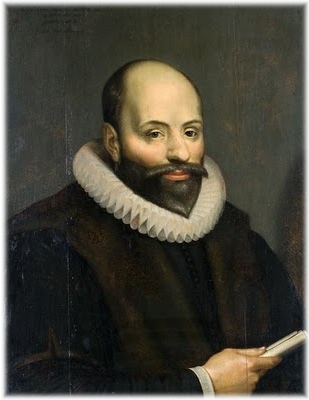
type of Protestant theology taught by a Dutch theologian named James Arminius
(1560-1609). The key issues that generally identify those that identify with
this theology are: a denial of
absolute predestination, and an emphasis on the freedom and freewill of man.
Most, who are wear the label "Arminian", tend not to adhere to the
Baptist doctrine of "Eternal Security" or the Calvinistic doctrine of
the "Perseverance of the Saints". A true Arminian admits that man is
only free to respond because the Grace of God has enabled him to do so. Those
that overemphasize the idea of human freedom and deny the depravity of man at
the expense of grace are clearly in the camp of Pelagianism. Biblical
Support for Arminianism
Definitions From: http://www.eternalsecurity.us/biblical_theology_glossary.htm
Tough
Question:
Did it rain before the Flood?
Answer: Probably not but I cannot say a definitive
no…
Genesis 2:5-6 And every plant of the field before it was
in the earth, and every herb of the field before it grew: for the LORD God had
not caused it to rain upon the earth, and there was not a man to till the ground. (6)
But there went up a mist from the earth, and watered the whole face of
the ground.
The referenced scripture is speaking about the
time just before the creation of man. Between this time and the Flood, it is
not a slam dunk that did not rain. I lean that way though. The mist may have
been enough to sustain plant life. Many believe that the perfect atmosphere of
Earth in the time in Genesis was a veritable hyperbaric chamber and that the
ideal and moist conditions were a contributing factor in the gigantic sizes of plants
and animals as well as their long lives [GOD ordained of course]. Some also
believe that there was a layer of water above the atmosphere, which protected
plant and animal life from harmful sun rays. The thinking is that this layer of
water was permitted to fall to the Earth during the flood; thus exposing all
life to life-shortening rays; also, when we couple in the subterranean seas
bursting from beneath, you have a global Flood and the associated cataclysmic
geographical, topological and atmospheric changes. None of this is 100%
verifiable but logical. So, I say no…but not a no written in stone
http://www.answersingenesis.org/articles/2010/10/19/rain-before-flood
I love YOU and I love you
Brother Jeremy A. Maynard

No comments:
Post a Comment